

 See My Latest Article on HelloNation
Water damage on a home’s exterior often begins as a small failure: a cracked seal, a clogged gutter, a loose piece of siding, or a patch of deteriorated wood. Left untreated, moisture can move behind the exterior surface and affect sheathing, insulation, framing, windows, and interior walls.
For homeowners in Reading, PA, repeated freeze-thaw cycles, summer thunderstorms, wind-driven rain, and seasonal leaf buildup can make exterior water management especially important. Early inspection is usually easier and less expensive than repairing concealed damage.
What does exterior water damage look like?
Exterior water damage may be obvious, such as rotted trim or peeling paint, but it can also appear as a subtle change in texture, color, or alignment. Look for:
- Soft, swollen, cracked, or crumbling wood
- Peeling paint, bubbling finish, or blistered coatings
- Dark stains below windows, roof edges, or gutters
- Warped siding, separated seams, or loose panels
- Rusted fasteners and corroded metal flashing
- Algae or mildew in areas that stay damp
- Sagging gutters or water stains beneath them
- Caulk that has shrunk, split, or pulled away from a joint
- Cracks around windows, doors, porches, and exterior penetrations
- Damp or musty odors near exterior walls indoors
A single stain does not always reveal the full extent of the problem. Water may travel sideways or downward inside a wall before becoming visible.
Where should homeowners inspect first?
Begin with areas where water is directed toward or through the exterior. A systematic inspection is more useful than looking only at the most noticeable stain.
Roof edges and drainage components
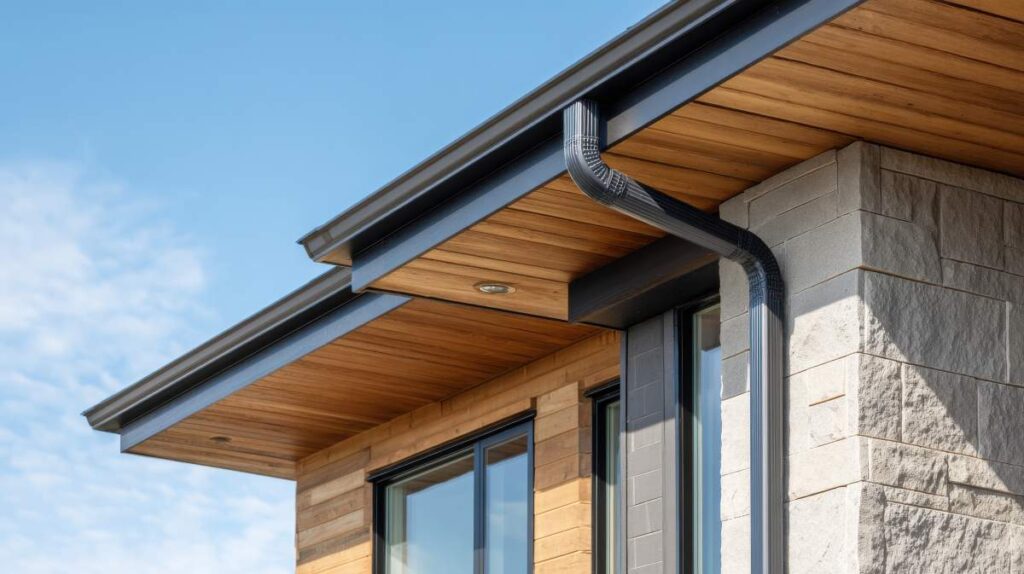
Check roof-to-wall intersections, valleys, chimney areas, and locations where flashing meets siding. Gutters should slope toward downspouts, remain securely attached, and discharge water far enough away from the foundation.
Look for overflowing gutters, staining beneath the roof edge, and soil erosion below downspouts. Water that repeatedly falls beside the foundation can contribute to basement dampness, settlement-related cracking, and deterioration of lower wall materials.
Windows and doors
Inspect the top corners, lower corners, sills, and surrounding trim. Pay close attention to gaps where different materials meet. Failed caulk can allow rain to enter behind the trim, where it may remain hidden.
Do not assume that water entering near a window is caused by the window itself. The source may be damaged flashing above it, a siding installation problem, or a roof drainage issue higher on the wall.
Siding, trim, and exterior walls
Examine horizontal seams, vertical joints, penetrations for pipes or wires, and transitions between siding and masonry. Press gently on wood trim with a screwdriver or similar tool. Sound wood should feel firm. If the tool sinks easily, the material may be decayed.
Vinyl and fiber-cement siding can conceal problems behind the surface. Warping, staining, or an unusual bulge may indicate moisture movement behind the cladding.
Porches, decks, and steps
Deck boards, rail connections, ledger areas, porch roofs, and stair attachments deserve careful attention. Water damage may weaken structural connections before the walking surface looks seriously damaged.
Look for soft boards, rusted hardware, separated joints, sagging sections, and gaps where a deck or porch meets the house. Never rely on a surface coating to restore strength to deteriorated wood.
How can water damage be confirmed?
Visual inspection is the first step, but concealed moisture sometimes requires additional checking. A moisture meter can help compare suspicious areas with nearby dry materials. An inexpensive inspection mirror or camera may help examine tight spaces around trim and drainage components.
Probe questionable wood in several locations rather than testing only one spot. Damage can be uneven, with the exterior appearing intact while the back side has deteriorated.
Interior clues can also help identify an exterior leak:
- Stains near window or door openings
- Peeling paint on interior walls
- Soft drywall or swollen flooring
- Mold-like odors
- Damp insulation
- Staining that becomes worse after wind-driven rain
A leak that appears only during certain weather may be entering through flashing or a joint rather than through a large visible hole.
What exterior water damage can be repaired by a homeowner?
Minor maintenance problems can often be addressed with ordinary tools and careful preparation. Examples include cleaning gutters, extending downspouts, replacing small areas of failed caulk, tightening loose gutter hardware, and replacing a limited amount of undamaged trim.
Before sealing anything, remove loose material and allow the area to dry. Caulk should not be used to cover rot, trap wet wood, or substitute for missing flashing. Select a sealant compatible with the surfaces involved and follow the product’s temperature and curing requirements.
Small areas of surface-level paint failure can be scraped, primed, and repainted after the underlying moisture source has been corrected. Painting over active water damage usually causes the finish to fail again.

When does damaged material need to be replaced?
Replacement is usually necessary when wood is soft, deeply cracked, swollen, or structurally weakened. If the affected area extends behind siding or trim, the damaged section may need to be opened so the sheathing and framing can be inspected.
Common repair steps may include:
1. Finding and correcting the source of water.
2. Removing deteriorated trim, siding, or sheathing.
3. Allowing wet materials to dry.
4. Inspecting framing and insulation for decay or mold growth.
5. Replacing damaged materials with compatible components.
6. Reinstalling flashing so water drains outward.
7. Sealing appropriate joints without blocking drainage paths.
8. Replacing or refinishing the exterior surface.
The visible repair should not be considered complete if water still has a path behind it. Exterior wall systems are designed to manage small amounts of water through flashing, drainage spaces, and openings at the bottom of the assembly.
Which signs indicate a safety concern?
Some conditions should not be treated as routine maintenance. Prompt evaluation is warranted when exterior water damage involves:
- Sagging roofs, porches, decks, or balconies
- Loose masonry, bricks, or concrete pieces above entrances
- Rotted structural posts, beams, or ledger connections
- Exposed electrical wiring or fixtures
- Extensive mold growth
- Water near electrical panels or indoor outlets
- Large areas of missing siding or damaged wall sheathing
- Windows or doors that have shifted because of wall movement
Avoid climbing onto a wet roof, unstable deck, or icy ladder. Weather conditions can make a minor inspection hazardous, particularly during winter or after a storm.
How can future water damage be reduced?
Prevention depends on keeping water moving away from the house and maintaining the exterior before small failures spread. Inspect drainage and exterior surfaces at least twice a year, with additional checks after major storms.
Useful habits include:
- Remove leaves and sediment from gutters and downspouts.
- Keep downspout discharge away from the foundation.
- Trim vegetation that holds moisture against siding.
- Check caulk and flashing around openings.
- Keep roof drainage paths clear.
- Touch up exposed wood before it absorbs repeated moisture.
- Watch for ice buildup and blocked drainage during freezing weather.
- Recheck repairs after the next heavy rain.
In older homes, several layers of repairs may have accumulated over time. A newer coat of paint or replacement siding does not necessarily mean that the flashing and drainage beneath it are functioning properly. Understanding where water enters, how it travels, and where it exits is the key to making a durable repair.